Naples Underground vs the Bourbon Tunnel
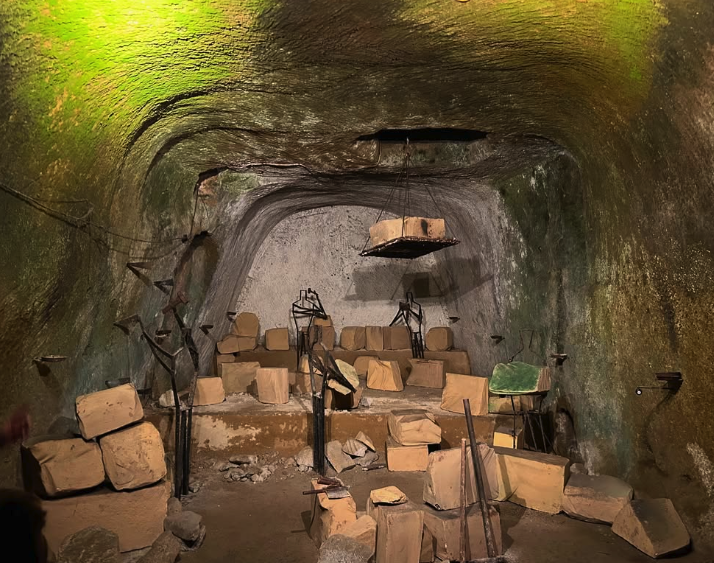
Two of the most popular underground experiences in Naples share almost nothing except the fact that they are below the streets. The ancient aqueduct of the Naples Underground and the nineteenth-century Bourbon Tunnel tell completely different stories. Here is how to choose — and you can see both alongside every other option on our Naples Underground tours page.
At a glance
- Naples Underground (aqueduct): ancient, ~40 m deep, ~121 steps, narrow candlelit passage, Roman theatre.
- Bourbon Tunnel: 19th-century, broader, abandoned vehicles, partial step-free access.
Different centuries, different purposes
The aqueduct network — Napoli Sotterranea — is ancient: Greeks quarried the tuff, Romans built the aqueduct, and wartime families sheltered in it. The Bourbon Tunnel, by contrast, was cut in the nineteenth century for the Bourbon royal family, intended as an escape route linking the palace to the barracks. Both went on to serve as air-raid shelters, but their origins could hardly be more different. The ancient half of that story is told in our history of the Naples Underground.
Did you know? The Bourbon Tunnel spent decades as a municipal impound lot, and rusting cars and motorcycles still sit where they were abandoned — alongside the wartime relics, they are its most unforgettable and unexpected sight.
What you see
On the aqueduct tour you descend the 121 steps to follow narrow water channels and vast cisterns, cross a tight candlelit passage, and finish at the buried Roman theatre — intimate, atmospheric and physically demanding. The Bourbon Tunnel is a broader, taller space whose signature sight is those abandoned vehicles. One feels like exploring an ancient river; the other like walking into a forgotten garage beneath the city. For the full aqueduct walkthrough, see what to expect on a Naples Underground tour.
Accessibility
This is where the choice can be made for you. The aqueduct tours are not wheelchair accessible: the staircases rule it out, though the narrow passage can be skipped. The Bourbon Tunnel is the more accessible of the two, described by operators as wheelchair accessible for around sixty percent of its route via the Via Domenico Morelli entrance. Full details are on our accessibility guide.
Useful tip. If steps are a barrier for anyone in your group, start with the Bourbon Tunnel — it is the one option in the city with meaningful step-free access, and it still delivers a genuine underground experience.
Atmosphere
Both are memorable, but the mood differs. The aqueduct is hushed and elemental — stone, water, candlelight, the weight of two and a half thousand years. The Bourbon Tunnel is stranger and more melancholy, its wartime shelters and abandoned vehicles telling a twentieth-century story. Travellers who love the aqueduct sometimes find the Bourbon Tunnel the more surprising of the two.
Which to choose — or do both
Want the classic, ancient experience — cisterns, narrow passage, Roman theatre? Choose the aqueduct; the skip-the-line ticket or the Spanish Quarters tour are the easiest ways in. Drawn to more recent history, a broader space, or easier access? Choose the Bourbon Tunnel. And if you have the time, there is a strong case for doing both: they are close together, each takes about an hour, and seeing them back to back gives you the full span of the city’s underground.
Did you know? Neither the aqueduct nor the Bourbon Tunnel is the Catacombs of San Gennaro — those early-Christian burial galleries are a separate site on the Capodimonte hill and are not part of this comparison.
The origins in more depth
It is worth dwelling on how differently these two spaces came to exist. The aqueduct grew organically over many centuries: Greek quarrying opened the voids, Roman engineering linked them into a water system, and generations of well-keepers maintained it until disease and modernity retired it. The Bourbon Tunnel was the opposite — a deliberate, single project of the mid-nineteenth century, ordered by a nervous monarchy that wanted a secure route from the royal palace to the sea. One is the slow accumulation of a city’s needs; the other is a specific answer to a specific fear.
Practical logistics
The aqueduct entrances cluster in the heart of the historic centre, while the Bourbon Tunnel sits over towards Chiaia, with its access on Via Domenico Morelli. Both are easy to reach on foot or by Line 1 of the metro, and both keep their own opening hours, so check each before you plan a combination — our visiting guide has the details. As always on the aqueduct side, English departures are limited and worth booking ahead.
Doing both in a day
Because each visit runs about an hour below ground and the two sites are a short journey apart, seeing both in a single day is entirely realistic. A relaxed plan is the aqueduct in the morning — the walking tour with the underground Roman ruins is a good half-day option — then the Bourbon Tunnel in the afternoon. Done this way, the two experiences illuminate each other: you come to appreciate how many different pressures — thirst, war, royal anxiety — have all been answered by digging into the same soft stone.
Atmosphere, in depth
Both are memorable, but the mood differs sharply. The aqueduct is hushed and elemental — stone, water, candlelight, the weight of two and a half thousand years pressing in from every wall. The Bourbon Tunnel is stranger and more melancholy, its wartime shelters and abandoned vehicles telling a twentieth-century story of a city under pressure. Travellers who love the aqueduct sometimes find the Bourbon Tunnel the more surprising of the two, precisely because it is so unlike what they expected of an “underground” visit. Reading a few traveller reviews for each is a good way to sense which mood appeals to you.
A note on the wider underground
The aqueduct and the Bourbon Tunnel are the headline experiences, but they are not the only voids beneath Naples. The Neapolis Sotterrata preserves Roman streets under San Lorenzo Maggiore, and other cellars, crypts and quarry chambers open here and there across the city. Thinking of the underground as a whole world rather than a single attraction helps you plan — you are choosing not just a tour but a way in to a layered, hidden city, and different doors reveal different chapters of it, as our guide to which entrance is which lays out. Whichever you pick, a few habits serve you well below ground: wear closed shoes, bring a light layer against the steady cool, carry a phone torch, and book your English slot ahead where one is offered.
The bottom line
The aqueduct and the Bourbon Tunnel are not rivals so much as two chapters of the same buried city, written centuries apart. If you are still not sure which door is which, our guide to which entrance is which lays out all four sites — and when you are ready, you can compare every Naples Underground tour in one place. For most visitors the honest answer is that neither is a mistake: the aqueduct rewards those who want ancient depth and atmosphere, the Bourbon Tunnel those who want recent history and easier access, and a great many people are glad they made room for both. Whichever you choose, you will come back up into the sunlight seeing the streets of Naples — and the hollow world humming beneath them — a little differently.