Napoli Sotterranea vs the Bourbon Tunnel: Which Naples Underground Should You Book?
Short answer: they are two different sites with two different tickets, and no tour on these pages enters the Bourbon Tunnel. Napoli Sotterranea is a Greek and Roman quarry-and-aqueduct system about forty metres down; the Galleria Borbonica is a nineteenth-century military passage under a different hill. If you only do one and you want the ancient city, do Napoli Sotterranea.
The confusion is real, and it is documented
A traveller review on one of the small-group walks listed here is titled, in so many words, that the tour does not include the Bourbon Tunnels. Somebody booked expecting one underground and got another. That is the whole reason this comparison exists.
It happens because both sites market themselves as Naples underground, both are genuinely underground, and both are run as guided visits. What differs is almost everything else.
No tour or ticket on these pages goes into the Bourbon Tunnel or the Galleria Borbonica. If that is the site you want, book it directly with its own operator. What the tours here do enter is set out on the four undergrounds.
What each one actually is
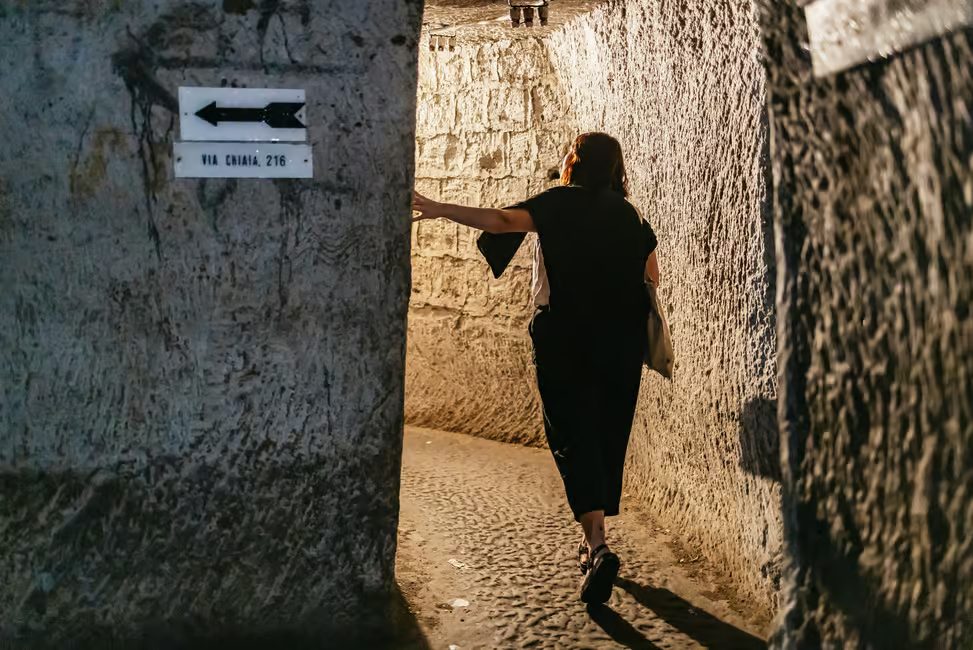
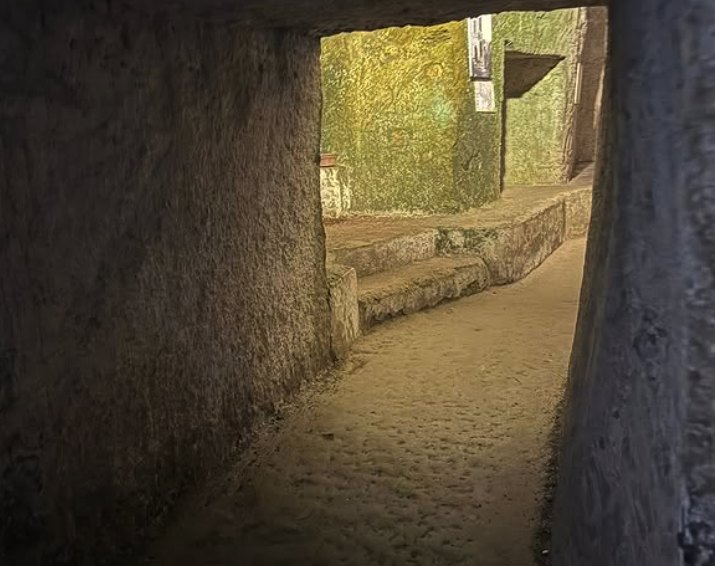
Napoli Sotterranea is the quarry system under the historic centre. Tuff was cut out of it to build the city overhead from the Greek period onwards; the voids were then linked into the Greco-Roman aqueduct that fed wells across the centre until the 1880s; and the same spaces became air-raid shelters in the Second World War. Entered from Piazza San Gaetano 69, about forty metres down, 136 steps, guided only.
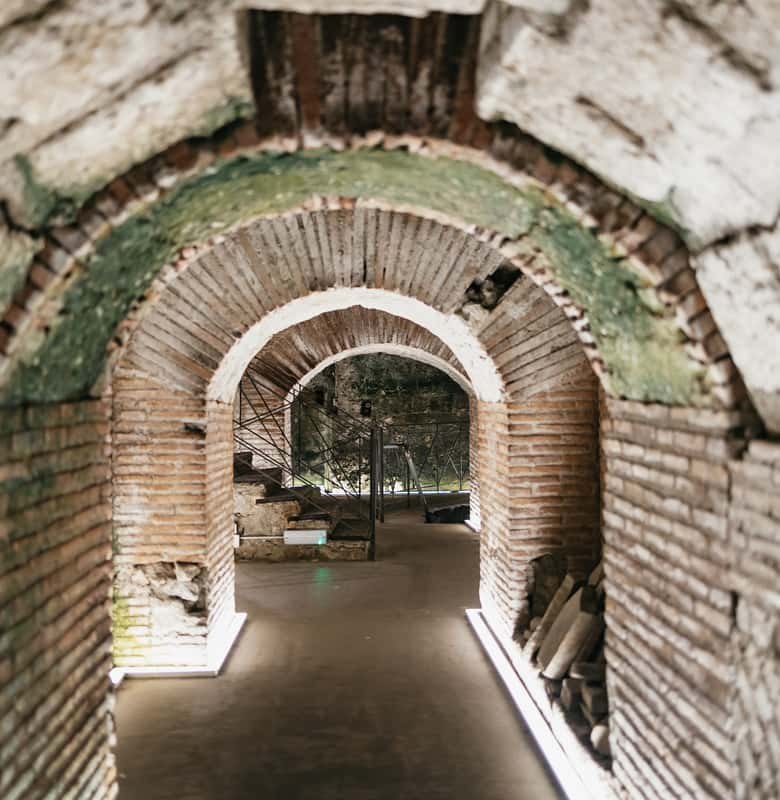
The Bourbon Tunnel, or Galleria Borbonica, is a nineteenth-century military passage cut under the Monte di Dio ridge, later used as a wartime shelter and a vehicle pound. It runs its own visitor routes under names including Percorso Standard, Via delle Memorie, Percorso Avventura and Speleo Light, and it sells its own tickets from its own entrance.
Side by side
| Napoli Sotterranea | Bourbon Tunnel | |
|---|---|---|
| Built for | Quarrying stone, then carrying water | Military movement under the ridge |
| Period | Greek and Roman, reused to 1885 | Nineteenth century |
| Depth | About 40 metres | Not verified here |
| Where | Piazza San Gaetano 69, historic centre | Under the Monte di Dio ridge, west of the centre |
| Wartime use | Air-raid shelter, objects left in place | Air-raid shelter, later a vehicle pound |
| Bookable here | Yes | No |
Figures for Napoli Sotterranea are its own; the Bourbon Tunnel’s timetable and prices are not quoted here because none could be verified when this was written — check its own site.
See every Naples Underground tour
The case for Napoli Sotterranea
It is the older story and the denser hour. You get the quarry faces, the plastered aqueduct channels, cisterns that still hold water, the optional candlelit passage and the Roman theatre with its recently reopened upper tier — roughly two and a half thousand years in a single walk. It is also the one with a shelter where the objects and drawings were left where they fell.
The route, stop by stop, is on the path.
The case for the Bourbon Tunnel
It is a different subject: engineering and the twentieth century rather than antiquity. Its appeal is the scale of the cut, the wartime and post-war material left in it, and the fact that it is a single purpose-built passage rather than a network of quarry voids. If you have already done the ancient city and want the other half of Naples underground, that is where it is.
Book it with its own operator; nothing on these pages sells it.
Can you do both?
Easily, in one day. They are on opposite sides of the centre — the Bourbon Tunnel sits west of Piazza del Plebiscito, Napoli Sotterranea in the old town — which is about a twenty-five minute walk, or two stops on metro Line 1 between Toledo and Dante. Do the ancient system first: it is the context everything else in Naples underground sits inside.
If you only have half a day, a better second underground is the Neapolis Sotterrata at Piazza San Gaetano 316, which is one minute from the first door and ten metres down. The sequencing is in the one-day itinerary.
Why people mix them up in the first place
Three reasons, and they compound. Both sites use ‘Naples underground’ in their own marketing, in English and in Italian. Both were air-raid shelters, so photographs of one look very like photographs of the other. And resale listings tend to describe what a tour does rather than which site it enters, so a title saying ‘underground Naples’ can mean any of several places.
The fix is boring and it works: read the inclusions, not the title. A listing that names its site names it in the inclusions line, and every card in this subject is labelled that way — see the four undergrounds for which enters what.
What you give up by choosing one
Choosing Napoli Sotterranea costs you the nineteenth century: a purpose-cut passage on a scale the quarry voids never had, and the post-war material left in it. Choosing the Bourbon Tunnel costs you the ancient city — the Greek and Roman quarrying, the plastered aqueduct channels, the cisterns and the Roman theatre. Neither is a lesser visit; they are answers to different questions.
If your reason for going underground in Naples is the war, both work and the shelter on the official route is the more intact of the two. If it is the city beneath the city, only one of them is that.
The third option nobody compares
There is a better second underground than either, for most itineraries: the Neapolis Sotterrata at Piazza San Gaetano 316. It is one minute from the Napoli Sotterranea entrance, ten metres down rather than forty, and it is a Roman market street with its shopfronts, its treasury and the covered market where the city bought its food. It is also the cheapest way underground in this subject, the only one you may walk alone with a free audio guide, and the only one described as wheelchair accessible.
Two ancient undergrounds on one square, forty metres apart in depth, is a better hour than crossing the centre for a third site — unless the nineteenth century is specifically what you came for.
The sequencing for a full day is in the one-day itinerary, and every fare is on naples underground city tour.
Verdict, by visitor type
- First visit to Naples: Napoli Sotterranea. It explains the city above it.
- Interested in the war: both work, and the shelter on the official route is the more intact of the two.
- Interested in engineering: the Bourbon Tunnel, booked directly.
- Short on stairs: neither — take the Neapolis Sotterrata, which is step-free. See steps and access.
- Travelling with children: Napoli Sotterranea, for the candle and the shelter.
Everything bookable, compared on depth, length and price, is on Naples Underground Tours.
Tours that fit this post
Book the tuff tunnels